

High-Intent Buyer Guide: Value & Technology for Your New Smart Home
Home Technology: Building a new home is one of the biggest investments most Australians will make. For Sydney homeowners, that investment increasingly includes more than floorplans, kitchens, bathrooms and landscaping. Technology is becoming an important part of how a home is designed, operated and experienced.
From automated lighting and climate control to security, entertainment, energy monitoring, solar integration and EV charging, smart-home technology can improve convenience and functionality. But not every smart-home feature provides the same value.
The challenge for buyers is knowing what is worth paying for, what should be planned from the beginning, and which technologies can genuinely improve the long-term value of a home.
Home Technology: This high-intent buyer guide is designed for homeowners who are actively considering a smart home and want to make informed decisions based on value, functionality, future-readiness and technology.
For homeowners working with Alpha Smart Homes in Australia, the objective should not simply be to install as many smart devices as possible. The better approach is to create an integrated system that supports your lifestyle today while allowing the home to evolve tomorrow. click here.
What Does “Value” Mean in a Smart Home Technology?
Home Technology: When discussing the value of smart-home technology, it is easy to focus only on the initial purchase price.
However, smart-home value can come from several areas:
- Convenience
- Energy management
- Security
- Comfort
- Accessibility
- Entertainment
- Time savings
- Future flexibility
- Reduced need for retrofitting
- Better control of household systems
Home Technology: A $200 smart device and a $10,000 integrated system should not be judged using exactly the same criteria.
The right question is not:
“How much does the smart Home Technology cost?”
It is:
“What problem does the technology solve, and how much value will it provide over the life of the home?”
This shift in thinking can help buyers spend their technology budget more intelligently.
1. Start With Your Lifestyle, Not the Gadgets

Home Technology: One of the biggest mistakes buyers make is choosing technology before deciding what they actually want their home to do.
Smart-home technology should begin with lifestyle requirements.
Think about how your household uses the property.
Do you want better security?
Do you want to reduce unnecessary energy consumption?
Do you want lighting to operate automatically?
Do you want your home to feel comfortable when you arrive?
Do you want integrated entertainment?
Do you want to prepare for an electric vehicle?
Do you want the ability to control your home remotely?
Do you want technology that can support ageing in place?
These questions are more valuable than starting with a list of popular smart-home technology products.
For example, a homeowner who frequently travels may place greater value on remote security and access control. A family with young children may priorities automated lighting and security. Someone working from home may prioritize networking and climate control.
Your technology investment should reflect your actual lifestyle.
2. Understand the Difference Between Smart Devices and Smart Homes
alpha smart living
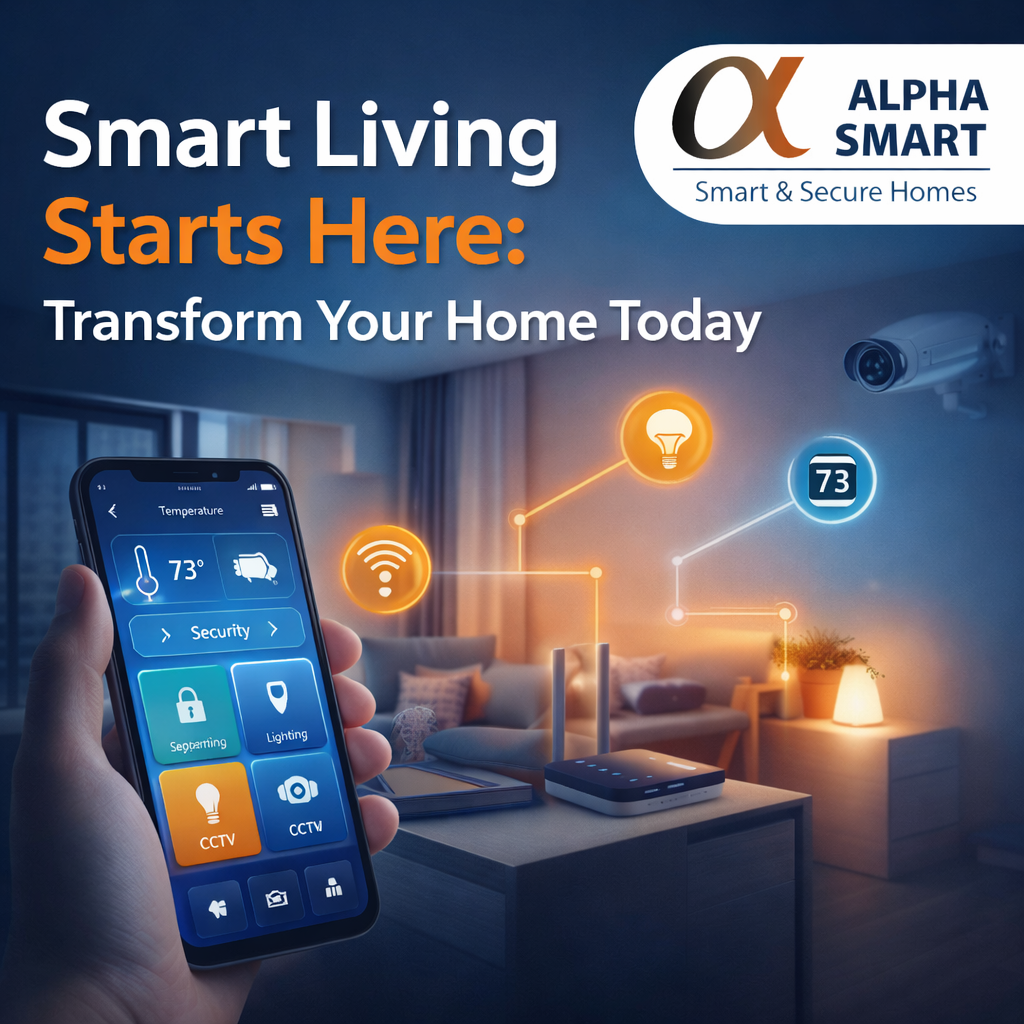
Home Technology: Buying individual smart products does not automatically create a smart home.
A smart bulb, smart doorbell, smart speaker and smart thermostat may all be useful individually. But if every device operates through a different application or ecosystem, the homeowner may end up managing multiple disconnected systems.
A properly planned smart home is more integrated.
For example:
Security + Lighting + Climate + Access + Entertainment + Energy
can be designed to work together.
Consider a simple “Away” scenario.
When everyone leaves the property, the system could potentially:
- Turn off selected lights.
- Adjust heating or cooling.
- Lock compatible doors.
- Arm security.
- Close selected blinds.
- Switch off designated equipment.
- Provide notifications where appropriate.
Instead of operating individual devices, the homeowner controls the overall environment.
That is where integrated automation can provide significantly greater value.
3. Priorities Infrastructure Before Gadgets
Home Technology: If you are building a new home, one of the smartest investments can be infrastructure.
Technology changes quickly.
Home Technology: The smart device you purchase today may be replaced by a different product in several years. But properly planned cable pathways, network infrastructure and electrical provisions can continue supporting the home for much longer.
Consider planning for:
- Data cabling
- Network equipment
- Wi-Fi access points
- Security cameras
- Doorbells
- Smart locks
- Audio
- Home theatre
- Motorized blinds
- Lighting control
- Sensors
- EV charging
- Solar
- Battery storage
- Future automation
Home Technology: Pre-wiring can be especially valuable during new construction because walls and ceilings are accessible.
Once the property is finished, adding infrastructure may become more difficult and potentially more expensive.
For this reason, a high-intent buyer should ask about future-ready infrastructure, not just the devices being installed on day one.
4. Invest in a Strong Home Network

The network is effectively the nervous system of a modern smart home.
As more household devices become connected, network performance becomes increasingly important.
A new home may contain:
- Smartphones
- Computers
- Smart TVs
- Cameras
- Smart appliances
- Lighting controllers
- Security devices
- Speakers
- Sensors
- Gaming systems
- Home automation controllers
- Tablets
- IoT devices
Home Technology: A single consumer-grade Wi-Fi router may not provide the ideal coverage for a large or multi-level architectural home.
A better approach is to plan network infrastructure around the property.
This may include structured data cabling and strategically positioned wireless access points.
The Australian Building Codes Board’s digital-building guidance highlights the importance of planning appropriate telecommunications infrastructure and pathways during building design.
For buyers, this means network infrastructure should be considered part of the home’s construction planning rather than an afterthought.
5. Smart Lighting: One of the Best Everyday Investments
Home Technology: Smart lighting is one of the technologies homeowners are likely to interact with every day.
It can provide convenience while also supporting the architectural design of the home.
Possible features include:
- Automated schedules
- Motion-based lighting
- Dimming
- Scene control
- App control
- Voice control
- Security-based lighting
- Outdoor automation
- Energy-conscious operation
Imagine having a “Morning” scene that gradually activates selected lights, an “Entertaining” scene for guests and a “Night” scene that turns off unnecessary lighting while leaving low-level pathway illumination.
The value comes from making everyday routines easier.
For architectural homes, lighting can also be integrated into the design through recessed fixtures, feature lighting, concealed LED strips and carefully positioned controls.
6. Security Should Be Considered a System
Home Technology: Security is another area where technology can provide meaningful value.
Rather than purchasing a camera and calling the home “smart,” consider the entire security environment.
Depending on the property, this could include:
- CCTV
- Video doorbells
- Smart locks
- Alarm systems
- Door and window sensors
- Motion detection
- Intercoms
- Gate automation
- Remote notifications
- Access management
Home Technology: Security cameras should be positioned based on the property’s architecture and coverage requirements.
During construction, cable pathways can be planned so that cameras do not rely on obvious surface-mounted cabling.
This can create a more professional installation while keeping the technology visually discreet.
A good security system should also be easy for the homeowner to understand. More features do not automatically mean better security.
7. Climate Control Can Deliver Comfort and Efficiency
Heating and cooling can represent a significant part of household energy use.
Smart climate control can help homeowners manage comfort more intelligently by combining:
- Temperature sensors
- Zoned systems
- Scheduling
- Occupancy information
- Remote control
- Automation
- Integration with other systems
For example, bedrooms can operate according to sleeping schedules while living areas follow different patterns.
A home office can be controlled separately rather than conditioning an entire house unnecessarily.
The value is not simply “smart control.” It is the ability to make the home’s climate system better aligned with how the household actually lives.
8. Solar, Batteries and Smart Energy Management
Home Technology: Energy technology deserves serious attention when building a new Australian home.
Solar photovoltaic systems can generate electricity, while battery storage can provide another way to manage energy use.
Smart energy monitoring can help homeowners understand:
- How much electricity the home is consuming
- When energy use is highest
- How much solar energy is being generated
- Where energy is being used
- How batteries are performing
- How EV charging affects consumption
Home Technology: The Australian Government’s energy-rating framework provides information about energy efficiency requirements and minimum energy performance standards for regulated products.
When designing a smart home, energy technology should therefore be considered as part of the broader property strategy.
The goal is not simply to add solar panels. It is to understand how the home’s energy-producing and energy-consuming systems can work together.
9. Plan for Electric Vehicle Charging
If you currently own an EV—or think you may purchase one in the future—EV charging should be discussed during the building process.
Even if you are not ready to install a charger immediately, consider:
- Garage layout
- Charger location
- Electrical capacity
- Cable pathways
- Switchboard requirements
- Future charging requirements
- Solar integration
- Energy management
Home Technology: Planning early can reduce the difficulty of adding infrastructure later.
The National Construction Code framework has also incorporated considerations around future electrification and EV charging provisions, reinforcing the importance of thinking about future electrical needs during building design.
10. Choose Technology That Can Evolve

Technology changes quickly.
This is one of the biggest reasons buyers should avoid designing their entire home around a single generation of gadgets.
Instead, look for systems and infrastructure that provide flexibility.
Ask:
- Can new devices be added later?
- Is the network scalable?
- Can automation routines be changed?
- Can equipment be replaced without rebuilding the home?
- Are spare conduits or pathways available where appropriate?
- Can additional cameras or sensors be installed?
- Can the system accommodate future energy technology?
Future-readiness does not mean predicting exactly what technology will exist in ten years.
It means creating a home that can adapt.
11. Think About Total Cost of Ownership
Home Technology: A high-intent buyer should look beyond the initial installation price.
Consider the total cost of ownership.
This may include:
Initial installation + equipment + configuration + maintenance + upgrades + replacement
A cheaper system is not always the better-value system if it requires frequent replacement or becomes difficult to maintain in Smart Home Technology.
Similarly, an expensive system is not automatically good value.
The best solution is one that matches the home’s requirements, budget and expected usage.
When comparing smart-home proposals, ask for clarity around what is included.
12. Ask What Is Included in the Builder’s Smart-Home Package
Different builders may use the term “Smart Home Technology ” differently.
One builder’s package may include only a few connected devices.
Another may include comprehensive automation infrastructure.
Before signing a contract, ask for a detailed scope.
Clarify:
- Number of smart lights
- Number of switches
- Number of cameras
- Security equipment
- Network infrastructure
- Data points
- Wi-Fi access points
- Audio provisions
- Automation controllers
- Smart locks
- Climate integration
- Blind automation
- EV provisions
- Solar integration
- Installation
- Programming
- Testing
- Handover
- Training
- Future support
Never assume a feature is included simply because it appears in a marketing brochure.
Get it documented.
13. Avoid Paying for Features You Will Never Use
Smart-home technology should be purposeful.
A homeowner may be tempted to automate every possible function, but excessive automation can make a system complicated and expensive.
Ask yourself:
Will this feature genuinely improve my daily life?
If the answer is no, it may not be worth prioritizing.
For example, automated lighting in frequently used areas may offer significant value.
A highly complex automation routine for a room that is rarely used may not.
Smart-home design should be customized to the household.
14. Consider the User Experience
Home Technology can be technically impressive and still be frustrating to use.
The homeowner should be able to understand the system.
A good smart-home experience should ideally be:
- Simple
- Reliable
- Consistent
- Easy to control
- Easy to troubleshoot
- Flexible
- Accessible
Think about who will use the system.
If several family members need access, everyone should be able to understand the essential controls.
If guests visit regularly, basic functions should remain intuitive.
The best automation is often the automation that happens without requiring the homeowner to think about it.
15. Look at Technology as Part of the Home’s Resale Story
Home technology is not a guaranteed dollar-for-dollar increase in property value.
However, well-designed infrastructure and useful integrated systems can make a home more appealing to some future buyers.
Features such as:
- Good networking
- Security
- Energy monitoring
- Automated lighting
- EV charging provisions
- Quality entertainment systems
- Smart climate control
- Solar and battery integration
can contribute to the overall functionality of a property.
But buyers should be careful about over-investing purely for resale.
Your home should primarily serve the people living in it.
16. Invisible Technology Can Protect Architectural Design
For premium architectural homes, aesthetics are particularly important.
Technology should not interfere with:
- Clean walls
- Feature ceilings
- Custom joinery
- Interior styling
- Façade design
- Landscaping
- Outdoor entertaining spaces
This is where concealed technology can create substantial value.
Speakers can be integrated into ceilings. Cameras can be strategically positioned. Data infrastructure can be concealed. Motorized blinds can be integrated into window details.
The home remains visually clean while technology works behind the scenes.
17. Don’t Forget Outdoor Smart Home Technology
Smart-home planning should not stop at the front door.
Outdoor areas can benefit from technology too.
Consider:
- Garden lighting
- Pool controls
- Outdoor audio
- Security cameras
- Gate automation
- Irrigation
- Outdoor entertaining lighting
- Wi-Fi coverage
- Garage access
- EV charging
Sydney homeowners often make significant investments in outdoor living spaces.
Technology can help make these areas more comfortable and convenient.
18. Compare Smart Home Technology Proposals Properly
If you are comparing builders or smart-home providers, avoid comparing only the headline price.
Instead, compare the scope and infrastructure.
For example:
| Area | Provider A | Provider B |
|---|---|---|
| Network infrastructure | Check scope | Check scope |
| Security | Check number/specification | Check number/specification |
| Lighting | Check quantity | Check quantity |
| Automation | Check functions | Check functions |
| EV provision | Included? | Included? |
| Solar integration | Included? | Included? |
| Installation | Included? | Included? |
| Programming | Included? | Included? |
| Handover | Included? | Included? |
| Future expansion | Ask | Ask |
| Support | Ask | Ask |
This makes comparisons more meaningful.
A $5,000 package and a $10,000 package cannot be compared fairly if the second includes substantially more infrastructure and functionality.
19. Questions to Ask Before You Commit
Before choosing a smart-home solution, ask the provider:
Infrastructure
- What will be pre-wired?
- Where will cables run?
- Are conduits included?
- Is there provision for future expansion?
Technology
- Which systems are included?
- Which brands are being specified?
- How do the systems communicate?
- Can additional devices be added later?
Network
- How many access points are recommended?
- Is structured cabling included?
- Where will the network equipment be located?
Security
- How many cameras are included?
- Where will they be positioned?
- Is recording included?
- Is remote access available?
Automation
- What scenes and routines are included?
- Who programs the system?
- Can homeowners modify automations later?
Energy
- Can the system integrate with solar?
- Can battery systems be monitored?
- Can EV charging be incorporated?
Support
- Is installation included?
- Is commissioning included?
- Is homeowner training provided?
- What happens if a device fails?
- What ongoing support is available?
These questions can reveal the difference between a basic collection of smart devices and a professionally designed smart-home solution.
20. Build a Smart Home in Stages if Your Budget Is Limited
Home Technology: You do not necessarily need to install everything at once.
A staged approach can be an excellent strategy.
For example:
Stage 1: Infrastructure
Invest in:
- Data cabling
- Network infrastructure
- Conduits
- Security pre-wiring
- Audio pre-wiring
- Blind provisions
- EV charging provisions
Stage 2: Essential Automation
Add:
- Smart lighting
- Security
- Access control
- Climate integration
Stage 3: Advanced Integration
Add:
- Automated blinds
- Whole-home audio
- Energy management
- Solar and battery integration
- Advanced scenes
Stage 4: Future Expansion
Add technologies as your lifestyle and budget evolve.
This approach can protect your initial investment while keeping the property adaptable.
The Alpha Smart Homes Approach
At Alpha Smart Homes, smart-home design should be based on the homeowner—not the gadget list.
For new Australian homes, particularly architectural homes in Sydney, the focus should be on combining technology, infrastructure and design into a coherent system.
The process can begin with understanding the homeowner’s requirements, followed by planning the infrastructure and selecting technologies that provide practical value.
The result should be a home that feels natural to use.
You should not have to become an engineer to operate your own house.
Instead, the technology should quietly handle repetitive tasks, provide useful information and give you greater control when you want it.
Final Smart Home Buyer Checklist
Before committing to a smart-home package, make sure you understand:
- What you actually want the technology to achieve
- Which infrastructure will be installed
- Which devices are included
- Which devices are optional
- How the systems integrate
- How reliable the network will be
- How security is designed
- How energy systems will be managed
- Whether EV charging has been considered
- What can be upgraded later
- What installation includes
- Whether programming is included
- Whether testing and commissioning are included
- What support is available
- What the total project cost will be
Most importantly, do not judge a smart home purely by the number of devices included.
Conclusion: Buy the Value, Not Just the Technology
A smart home is a long-term investment in the way your property functions.
The best technology is not necessarily the newest, most expensive or most complicated.
It is technology that provides meaningful benefits to the people living in the home.
For a high-intent buyer, the smartest approach is to focus on value first and technology second.
Start with your lifestyle. Identify the problems you want to solve. Build the right infrastructure. Priorities reliable networking. Integrate security, lighting, climate and energy systems where they provide genuine benefits. Plan for EV charging and future technologies. Then select devices that support the overall strategy.
For new homes, early planning is especially important. Once walls, ceilings and finishes are complete, changing infrastructure can become considerably harder.
With the right planning, your smart home does not need to look like a collection of technology.
It can look like a beautiful, comfortable Australian home.
The intelligence simply works quietly in the background.
For homeowners planning a new smart home in Sydney and across Australia, Alpha Smart Homes can help turn that vision into a practical technology strategy—one designed around lifestyle, architecture, value and future flexibility.


Leave A Comment