
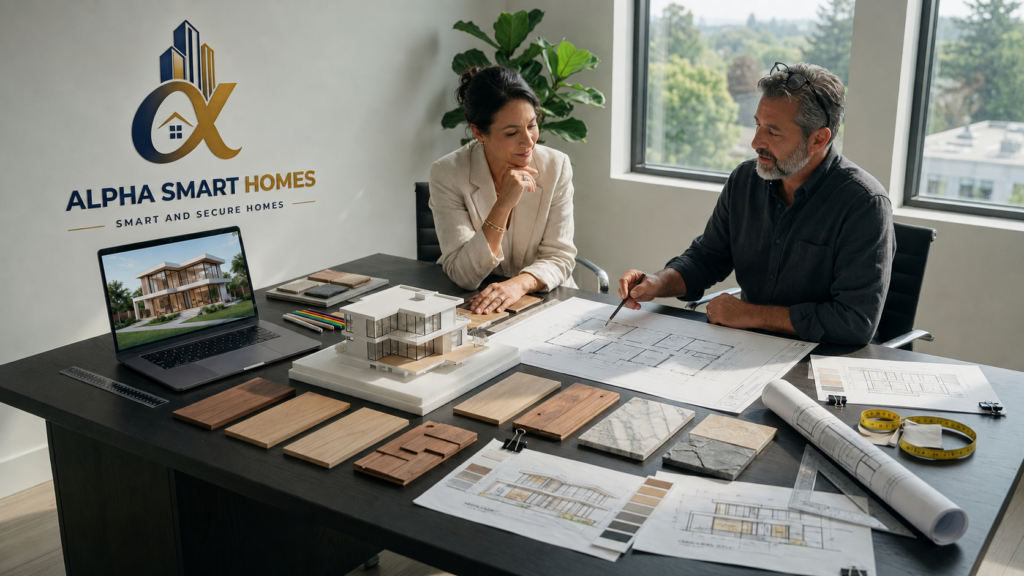
Cost and Budget Breakdown: How Much Does a Smart Home Cost in Australia?
Cost and Budget Breakdown: Building a smart home is an exciting opportunity to create a property that is more comfortable, secure, convenient and responsive to the way your family lives.
But before selecting smart lighting, automated blinds, security cameras, home entertainment or energy-management systems, there is one question almost every homeowner asks:
How much does a smart home cost?
The answer is not as straightforward as choosing a single package price.
A smart home can range from a relatively simple collection of connected devices to a fully integrated system covering lighting, security, climate, entertainment, networking, access, energy management and automation throughout the property.
For homeowners in Sydney and across Australia, the final cost depends on the home’s size, level of automation, infrastructure, equipment, architectural requirements, installation complexity and future expansion plans.
This guide from Alpha Smart Homes explains the major cost categories you should consider when creating a smart-home budget.
Important: Smart-home costs vary substantially between projects. The figures below are planning ranges rather than fixed quotations. Product specifications, labor, electrical requirements, building design and site conditions can all affect the final price. click here.
What Determines the Cost of a Smart Home?
Cost and Budget Breakdown: Before creating a budget, it helps to understand the factors that influence the overall investment.
The major factors include:
- Size of the property
- Number of rooms
- Number of automated functions
- Wired versus wireless infrastructure
- Lighting requirements
- Security requirements
- Network infrastructure
- Climate-control integration
- Audio and home theatre
- Motorized blinds
- Solar and battery integration
- EV charging
- Electrical work
- Programming and commissioning
- Future-proofing
- Ongoing support
Cost and Budget Breakdown: A small apartment with a few automated lights will have a completely different budget from a large architectural home with whole-home automation.
This is why homeowners should avoid comparing smart-home prices without first comparing the scope of work.
Smart Home Cost Tiers in Australia
For budgeting purposes, smart homes can generally be considered in three broad categories.
Entry-Level Smart Home
Indicative technology budget: approximately $2,000–$10,000+
An entry-level system may include:
- Smart lighting
- Smart plugs
- Basic security
- Smart doorbell
- Selected smart appliances
- Voice control
- Basic automation
- Basic networking
This approach is suitable for homeowners who want to introduce smart features gradually.
However, it may involve more independent devices rather than a fully integrated automation system.
Mid-Range Smart Home

Indicative technology budget: approximately $10,000–$30,000+
A mid-range system may include:
- Smart lighting
- Security cameras
- Smart locks
- Network infrastructure
- Climate integration
- Motorized blinds in selected areas
- Multi-room audio
- Centralized automation
- Smart access
- Energy monitoring
- Advanced scenes
This is often the level at which homeowners begin to experience the benefits of genuine whole-home integration.
Cost and Budget Breakdown: Premium Integrated Smart Home
Indicative technology and integration budget: $30,000–$100,000+
High-end architectural homes can require significantly larger investments.
A premium system may include:
- Whole-home lighting automation
- Comprehensive security
- Advanced access control
- High-performance network infrastructure
- Whole-home audio
- Home theatre
- Automated blinds throughout
- Climate integration
- Solar and battery integration
- EV charging
- Advanced energy management
- Extensive sensors
- Centralized control
- Custom automation scenes
- Concealed technology
- Professional programming
- Detailed commissioning
Cost and Budget Breakdown: The final figure can exceed these ranges depending on the property and technology specifications.
The important point is that there is no universal “smart home price.”
1. Smart Home Planning and Design Costs

Cost and Budget Breakdown: Before purchasing equipment, your smart home needs a plan.
Professional planning may involve:
- Property assessment
- Technology consultation
- Floor-plan review
- Lighting planning
- Network planning
- Security planning
- Equipment selection
- Automation design
- Electrical coordination
- Architectural coordination
Planning is particularly important for new construction.
A technology decision made after construction may require additional electrical work, drilling or surface-mounted equipment.
Early planning can help reduce these problems.
Cost and Budget Breakdown: For a premium home, the planning stage should ideally involve communication between the homeowner, architect, builder, electrician, interior designer and smart-home specialist.
2. Pre-Wiring and Structured Cabling

Cost and Budget Breakdown: Pre-wiring is one of the most important smart-home budget categories for a new build.
It can include cabling or pathways for:
- Data
- Wi-Fi access points
- Security cameras
- Doorbells
- Audio
- Television
- Home theatre
- Smart blinds
- Sensors
- Control systems
- Access control
Cost and Budget Breakdown: The cost depends on the size of the property and the number of points.
A homeowner should not necessarily install every device immediately.
Instead, consider installing the infrastructure that will be difficult to add later.
Cost and Budget Breakdown: For example, running cable to a future camera location while walls are open may be much easier than attempting to install that cable after the home is finished.
Budget principle:
Spend on infrastructure where future access will be difficult.
3. Network Infrastructure Costs
Cost and Budget Breakdown: A reliable network is the foundation of a connected home.
Depending on the property, network infrastructure may include:
- Ethernet cabling
- Network switches
- Wi-Fi access points
- Network cabinet
- Patch panels
- Router
- Fiber termination considerations
- UPS or backup power for selected equipment
Cost and Budget Breakdown: A small home may require only limited networking.
A large multi-story home may require several access points and extensive structured cabling.
A useful planning budget for a professionally designed residential network might range from several thousand dollars upward, depending heavily on the number of data points, equipment and installation complexity.
Cost and Budget Breakdown: The network should be sized for today’s requirements while allowing room for future devices.
4. Smart Lighting Costs
Cost and Budget Breakdown: Lighting can become one of the largest smart-home expenses because automation can be applied across many circuits.
Costs may include:
- Smart switches
- Dimmers
- Lighting controllers
- LED fixtures
- Downlights
- Feature lighting
- LED strips
- Sensors
- Control panels
- Programming
Cost and Budget Breakdown: A basic smart-lighting setup can be relatively inexpensive.
A whole-home architectural lighting-control system can become considerably more expensive.
For budgeting, homeowners should distinguish between:
Smart bulbs
and
Integrated lighting control.
Cost and Budget Breakdown: Smart bulbs are inexpensive and easy to replace.
Integrated lighting control involves the electrical design, switches, dimming, scenes and automation of the home.
The second approach can provide a much more cohesive experience but requires greater planning and investment.
5. Security System Costs
Cost and Budget Breakdown: Security costs depend on the size and risk profile of the property.
Potential components include:
- CCTV cameras
- Video doorbell
- Alarm system
- Door sensors
- Window sensors
- Motion sensors
- Smart locks
- Gate control
- Intercom
- Recording equipment
- Remote monitoring
Cost and Budget Breakdown: A basic security setup may cost a few thousand dollars.
A larger architectural home with multiple cameras, access control and integrated automation can require considerably more.
When comparing security quotes, look at more than camera quantity.
Check:
- Camera resolution
- Night vision
- Field of view
- Recording
- Storage
- Installation
- Cabling
- Integration
- Warranty
A properly positioned camera can be more valuable than simply adding more cameras.
6. Smart Access Control Costs
Cost and Budget Breakdown: Smart access systems can range from individual smart locks to comprehensive access-control solutions.
Potential costs include:
- Smart door locks
- Garage automation
- Gate automation
- Video intercoms
- Digital keypads
- Fingerprint systems
- Access cards
- Mobile access
Cost and Budget Breakdown: For a family home, basic smart locks may be sufficient.
For a large property, multiple entry points may need to be integrated into a broader security system.
Access control should also be evaluated for reliability and manual backup options.
7. Smart Climate Control Costs
Smart climate control can include:
- Smart thermostats
- Temperature sensors
- Zoned air conditioning
- Remote control
- Scheduling
- Automation
- Integration with occupancy sensors
Costs depend heavily on the HVAC system already specified for the home.
Cost and Budget Breakdown: If you are building a new home, it is worth discussing climate-control integration before selecting the air-conditioning system.
Retrofitting automation later may be more complicated.
Cost and Budget Breakdown: For budgeting purposes, smart control may range from relatively modest equipment costs for basic systems to several thousand dollars or more for advanced multi-zone integration.
8. Motorized Blinds and Curtains
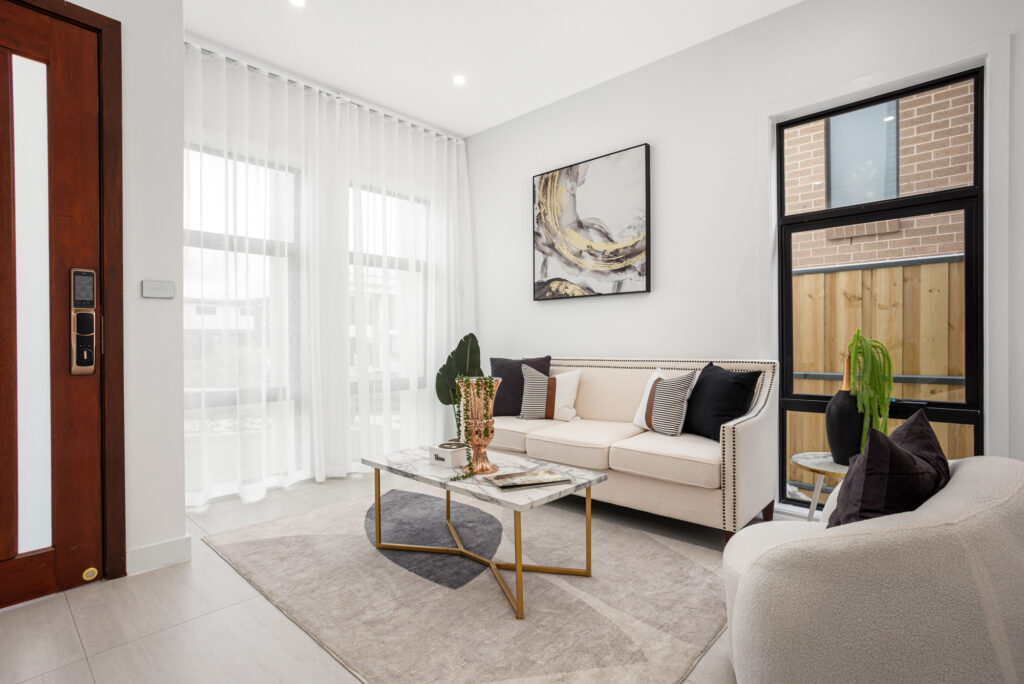
Cost and Budget Breakdown: Automated blinds can be a significant investment, particularly in architectural homes with many large windows.
The total cost can include:
- Blind or curtain hardware
- Motors
- Power
- Wiring
- Control systems
- Installation
- Automation
- Recessed architectural details
Cost and Budget Breakdown: The number and size of windows can have a major impact on cost.
If your home has 20 automated windows, the budget will obviously be very different from a home with four.
This is another area where early architectural coordination can improve the final result.
9. Audio and Whole-Home Entertainment
Entertainment budgets can vary enormously.
A basic multi-room audio system is very different from a dedicated cinema.
Potential costs include:
- In-ceiling speakers
- In-wall speakers
- Amplifiers
- Audio controllers
- Subwoofers
- TVs
- Home theatre projectors
- Screens
- Acoustic treatments
- Cabling
- Programming
Cost and Budget Breakdown: A small audio installation may cost a few thousand dollars.
A premium home theatre can cost tens of thousands of dollars or considerably more depending on equipment and room design.
Homeowners should determine whether they need:
Background music
or
High-performance entertainment.
The difference can be substantial.
10. Smart Energy Monitoring
Cost and Budget Breakdown: Energy management is becoming increasingly important for Australian homeowners.
A smart energy strategy may include:
- Electricity monitoring
- Solar monitoring
- Battery monitoring
- Smart appliances
- Load management
- EV charging integration
- HVAC monitoring
Cost and Budget Breakdown: Energy monitoring equipment itself may represent a relatively modest portion of the overall smart-home budget.
However, integration between multiple energy systems can increase complexity.
The Australian Government’s energy-rating framework provides information about energy efficiency requirements and minimum energy performance standards for regulated products.
Cost and Budget Breakdown: The goal should therefore be to combine efficient equipment with intelligent monitoring and control.
11. Solar and Battery Integration
Cost and Budget Breakdown: Solar and battery systems are not simply smart-home accessories.
They are substantial electrical and energy investments that should be considered separately within your overall construction budget.
Cost and Budget Breakdown: A smart-home system can potentially integrate with these technologies to provide better visibility and control.
For example, homeowners may want to monitor:
- Solar generation
- Battery charge
- Battery discharge
- Household consumption
- Grid import
- Grid export
Integration requirements depend on the equipment selected.
If solar and batteries are part of your project, discuss integration with your energy installer and smart-home provider early.
12. EV Charging Costs
Cost and Budget Breakdown: EV charging should be considered when planning a new home, particularly if an electric vehicle is already owned or expected in the future.
Costs can include:
- Charger hardware
- Electrical installation
- Cable runs
- Switchboard work
- Load management
- Solar integration
- Smart charging features
Cost and Budget Breakdown: A basic charger may be relatively affordable, while a more advanced installation can require additional electrical infrastructure.
For a new build, the most important investment may sometimes be the provisioning and infrastructure, even if the charger itself is installed later.
Cost and Budget Breakdown: The National Construction Code framework includes provisions and considerations related to future electrification and EV charging.
13. Central Control and Automation Hardware
Cost and Budget Breakdown: Integrated smart homes often require central controllers, gateways or automation hardware.
Depending on the system, this may include:
- Automation controller
- Network gateway
- Control processors
- Touch panels
- Central interfaces
- Equipment racks
- Power supplies
Cost and Budget Breakdown: The more systems that need to communicate, the more important the control architecture becomes.
A professional system should be designed so that the homeowner does not need to understand the technical complexity behind it.
14. Sensors and Automation Devices
Cost and Budget Breakdown: Sensors are small components that can have a major impact on how intelligent a home feels.
Potential sensors include:
- Motion
- Occupancy
- Temperature
- Humidity
- Light level
- Door/window
- Water leak
- Air quality
Cost and Budget Breakdown: Each sensor adds to the hardware and installation budget.
However, sensors can also make automation more responsive.
For example, rather than turning lights on according to a fixed schedule, an occupancy sensor can allow the system to respond to whether a space is actually being used.
15. Electrical and Installation Costs
Hardware is only one part of the smart-home budget.
Installation can include:
- Electrical labor
- Cable installation
- Device mounting
- Network configuration
- Programming
- Testing
- Commissioning
Cost and Budget Breakdown: For new homes, some electrical work may already form part of the builder’s electrical contract.
Therefore, homeowners should clarify exactly which smart-home components are included in the builder’s scope and which are supplied separately.
This prevents unexpected variations.
16. Programming and Commissioning
Cost and Budget Breakdown: Professional programming is essential for an integrated smart home.
Someone needs to configure:
- Lighting scenes
- Security rules
- Climate schedules
- User permissions
- Automation triggers
- Device communication
- Remote access
- Interfaces
Commissioning then verifies that everything works together.
A system should not simply be installed and left for the homeowner to figure out.
When requesting a quote, ask:
“Is programming and commissioning included?”
This single question can reveal a significant difference between proposals.
17. Budget for Future-Proofing
One of the smartest ways to spend a technology budget is to prepare for the future.
You may not need:
- 20 cameras today
- Automated blinds in every room
- Whole-home audio immediately
- EV charging today
But you may want these features later.
Consider allocating part of your construction budget toward:
- Additional conduits
- Extra data points
- Security pre-wiring
- Audio pre-wiring
- EV provisions
- Network capacity
- Equipment space
Future-proofing does not mean buying every device today.
It means making future installation easier.
18. Where Should You Spend More?
If your budget is limited, priorities infrastructure and high-value systems.
High Priority
1. Network infrastructure
A reliable network supports almost everything else.
2. Pre-wiring
It is easier to install before walls are closed.
3. Security
Security can provide significant practical value.
4. Lighting control
You interact with lighting every day.
5. Electrical capacity
Future technologies depend on appropriate infrastructure.
6. EV provisions
Especially if an EV is likely in the future.
19. Where Can You Save Money?
There are also areas where homeowners can reduce initial costs.
Install Automation in Stages
Automate the most important rooms first.
Pre-Wire Future Systems
Install infrastructure now and devices later.
Priorities High-Use Areas
Focus on:
- Kitchen
- Living room
- Master bedroom
- Entry
- Outdoor entertaining areas
Avoid Unnecessary Automation
Do not automate a feature simply because it is available.
Choose Scalable Systems
A system that can expand may provide better long-term value than replacing everything later.
20. Example Smart Home Budget
Here is a simplified example of how a new-build technology budget could be structured.
| Category | Indicative Budget |
|---|---|
| Smart-home design & planning | $1,000–$5,000+ |
| Network infrastructure | $2,000–$8,000+ |
| Pre-wiring | $2,000–$10,000+ |
| Smart lighting | $3,000–$15,000+ |
| Security | $3,000–$15,000+ |
| Smart access | $1,000–$8,000+ |
| Climate integration | $1,000–$8,000+ |
| Motorized blinds | $5,000–$25,000+ |
| Audio | $3,000–$20,000+ |
| Automation/control | $3,000–$20,000+ |
| Energy monitoring/integration | $1,000–$8,000+ |
| EV charging | $1,500–$8,000+ |
Important: These categories are not intended to be added together as a standard package. They are broad planning ranges only. A real project may include only some categories, while premium homes may exceed these figures significantly.
21. Three Example Budget Strategies
Option A: Essential Smart Home
Approximate technology budget: $5,000–$15,000+
Focus on:
- Network
- Basic smart lighting
- Video doorbell
- Selected security
- Smart access
- Basic automation
Best for homeowners who want useful technology without extensive automation.
Option B: Integrated Family Smart Home
Approximate technology budget: $15,000–$40,000+
Focus on:
- Structured network
- Smart lighting
- Security
- Access control
- Climate integration
- Selected motorized blinds
- Multi-room audio
- Energy monitoring
- Central automation
This provides a more connected whole-home experience.
Option C: Premium Architectural Smart Home
Approximate technology budget: $40,000–$100,000+
Focus on:
- Comprehensive lighting control
- High-end security
- Advanced networking
- Whole-home audio
- Home theatre
- Automated blinds
- Climate integration
- Energy management
- Solar/battery integration
- EV charging
- Advanced automation
- Concealed technology
- Professional commissioning
The final budget depends heavily on the architectural design and equipment specifications.
22. Smart Home Budget vs Traditional Home Budget
It is important to understand that smart-home technology is only one part of the total cost of building a home.
Your overall construction budget may already include:
- Land
- Design
- Planning
- Construction
- Structural work
- Electrical
- Plumbing
- Kitchens
- Bathrooms
- Flooring
- Landscaping
- Appliances
Smart technology should therefore be treated as a dedicated budget category.
Creating a separate technology allowance can make financial planning much easier.
23. How to Avoid Smart Home Budget Blowouts
Budget overruns often occur because homeowners add technology late in the project.
For example:
“I also want automated blinds.”
“Can we add cameras here?”
“Can we put speakers in the ceiling?”
“Can we install an EV charger?”
These changes may appear simple but can require additional wiring, electrical work, equipment and labour.
The best solution is to identify technology requirements during the design stage.
Create a technology schedule.
Document:
- Device
- Location
- Quantity
- Infrastructure
- Equipment
- Installation
- Integration
- Cost
This makes the project much easier to control.
24. Get a Detailed Smart Home Quote
Never rely on a single headline number.
Ask your smart-home provider for a detailed proposal.
It should ideally identify:
Equipment
What products are included?
Quantity
How many?
Location
Where will each device be installed?
Infrastructure
What cabling and equipment are included?
Labor
What installation work is included?
Programming
Who configures the system?
Commissioning
Who tests it?
Warranty
What happens if something fails?
Support
Who assists after handover?
A detailed quote makes it easier to compare providers fairly.
25. Think About Value Over 10 Years
Smart-home budgeting should not stop at the initial purchase.
Ask yourself:
How will this technology perform over the next decade?
A good system should ideally be:
- Reliable
- Maintainable
- Expandable
- Easy to use
- Supported
- Adaptable
You may replace individual devices over time, but good infrastructure can remain useful for many years.
This is particularly important for new homes.
How Alpha Smart Homes Helps With Smart Home Budget Planning
At Alpha Smart Homes, smart-home budgeting should begin with understanding the property and the homeowner.
Every project is different.
A family building a four-bedroom home may have completely different requirements from a luxury architectural-home owner with extensive outdoor areas, home theatre, solar, battery storage and EV charging.
Rather than starting with an arbitrary package price, the technology strategy should consider:
Lifestyle → Architecture → Infrastructure → Technology → Automation → Future Expansion
This approach helps homeowners identify where their money will provide the greatest value.
It also makes it easier to separate essential infrastructure from optional upgrades.
For a new build, Alpha Smart Homes can help homeowners consider technology early, when changes are generally easier to coordinate with the building and electrical process.
Smart Home Budget Checklist
Before finalizing your budget, ask:
-
What is my total technology budget?
-
Which features are essential?
-
Which features are optional?
-
What should be pre-wired?
-
What network infrastructure is required?
-
How many security cameras are needed?
-
How much lighting should be automated?
-
Do I need smart climate control?
-
Do I want motorized blinds?
-
Do I need whole-home audio?
-
Should solar and batteries be integrated?
-
Do I need EV charging?
-
What equipment needs dedicated space?
-
Is programming included?
-
Is commissioning included?
-
Is training included?
-
What warranty is provided?
-
What ongoing support is available?
-
What infrastructure should be reserved for future upgrades?
Final Thoughts: Build the Budget Around Value
The cost of a smart home in Australia can vary from a few thousand dollars for basic connected features to well over $100,000 for a highly customised luxury automation system.
There is no single correct budget.
The right investment depends on your property, lifestyle, priorities and expectations.
For most homeowners, the smartest strategy is not to automate everything.
Instead:
Priorities infrastructure.
Invest in reliability.
Automate high-value functions.
Plan for future technology.
Compare complete systems rather than individual devices.
Understand installation and programming costs.
Keep the user experience simple.
A well-designed smart home should make everyday life easier without becoming unnecessarily complicated.
For Australian homeowners building a new property, early planning provides one of the biggest advantages. Cabling, network infrastructure, electrical capacity, security provisions, audio, EV charging and automation requirements can be considered before the walls are closed.
At Alpha Smart Homes, the goal is to help homeowners turn their technology budget into a practical, integrated smart-home solution—one that delivers value today while remaining adaptable for tomorrow.
Because the best smart home is not the one that costs the most.
It is the one that gives you the most useful technology, reliability and convenience for the investment you make.


Leave A Comment