
New Home Builders: What to Consider Before Choosing the Right Team
Choosing the right new home builders is one of the biggest decisions you will make when planning a new home. Your builder can influence everything from the initial design and budget to construction quality, communication, project timelines and the final result.
Building a new home is an exciting opportunity. You can create a property that matches your lifestyle, reflects your personal taste and includes the features you need for years to come. But turning an idea into a completed home requires careful planning and the right professional team.
With so many building companies available, comparing your options can sometimes feel overwhelming. A low price may look attractive, but it does not always mean better value. Likewise, a beautiful portfolio does not necessarily tell you how a builder manages communication, variations, site challenges or unexpected problems.
The best new home builders should offer a combination of experience, transparency, quality workmanship, practical advice and reliable project management.
In this guide, we will explore 10 important things to consider before choosing your builder. By checking these areas carefully, you can make a more informed decision and approach your new-home project with greater confidence.
Table of Contents
- Check the Builder’s Experience
- Review Previous Projects
- Compare Pricing and Inclusions
- Understand Design and Planning Support
- Investigate Construction Quality
- Ask About Communication
- Understand the Building Timeline
- Check Site and Construction Expertise
- Review Contracts and Variations
- Consider Reputation and Customer Service
- Questions to Ask Before Choosing
- Final Checklist
- Final Thoughts
1. Check the Builder’s Experience
One of the first things to investigate when comparing new home builders is their experience.
Building a home involves many different processes. Design, engineering, approvals, site preparation, materials, trades, inspections and construction must all be coordinated correctly.
An experienced builder is more likely to understand how these stages connect and where potential problems can occur.
Ask how long the company has been operating and what types of homes they usually build. If you are planning a customized property, find out whether the new home builders has experience with projects similar to yours.
Experience does not automatically guarantee perfection, but it can provide valuable knowledge.
For example, experienced builders may have dealt with challenging sites, complicated designs, material delays and unexpected construction issues before. That experience can help them identify potential problems earlier and develop practical solutions.
You should also ask whether the team has experience building in your local area. Local knowledge can be useful because site conditions, planning requirements, suppliers and construction considerations can vary between locations.
Questions to ask:
- How long have you been building new homes?
- What types of homes do you specialise in?
- Have you completed projects similar to mine?
- Do you regularly build in my area?
- Who will manage my project?
The answers can help you determine whether a builder’s experience matches your requirements.
2. Review Previous Projects
A builder’s previous work can tell you a great deal about their capabilities.
When comparing new home builders, do not rely only on photographs displayed on a website. Ask whether you can see examples of completed projects that are similar in style, size or complexity to your proposed home.
Look carefully at the quality of the finishes.
Pay attention to:
- Doors and windows
- Cabinetry
- Flooring
- Tiling
- Paint finishes
- Bathrooms
- Kitchens
- External finishes
- Landscaping
- Overall workmanship
You should also consider whether the new home builders design style matches your preferences.
A company may specialise in luxurious architectural homes, while another may focus on practical family homes. Neither approach is necessarily better; what matters is whether their experience fits your project.
If possible, ask about the age of previous homes. A recently completed home can show current workmanship, while older projects may provide insight into how the construction has performed over time.
You can also ask whether previous clients are willing to share their experiences.
A strong portfolio is useful, but combining it with genuine customer feedback gives you a more complete picture.
3. Compare Pricing and Inclusions
Price is an important consideration when choosing new home builders, but it should never be the only factor.
Two builders can provide quotes with very different prices because their inclusions may be different.
One quote may include premium fixtures, flooring, landscaping and upgraded appliances, while another may exclude many of these items.
Therefore, comparing only the final dollar amount can be misleading.
Instead, request a detailed quotation and carefully review what is included.
Look for items such as:
- Site preparation
- Foundations
- Structural work
- Windows and doors
- Plumbing
- Electrical work
- Heating and cooling
- Kitchen cabinetry
- Bathroom fixtures
- Flooring
- Painting
- Appliances
- Landscaping
- Driveway
- Fencing
- External works
Also ask about allowances and provisional costs.
If an important component has only been estimated, understand how that estimate was calculated and what could cause the final cost to change.
A transparent quotation makes it easier to compare new home builders fairly.
Avoid choosing purely on the lowest price
An unusually low quote may seem like an excellent opportunity, but it can sometimes indicate missing inclusions, unrealistic allowances or a misunderstanding of your project requirements.
Instead of asking, “Who is cheapest?” ask:
“Which builder provides the best overall value for my budget?”
That shift in thinking can help you make a more informed decision.
4. Understand Design and Planning Support
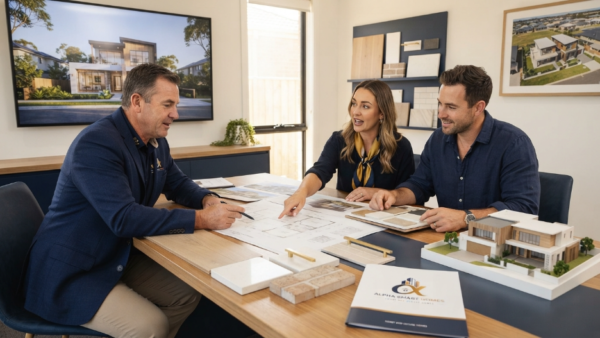
Your builder should be able to help turn your ideas into a practical home.
Before choosing new home builders, find out how much design and planning support they provide.
Some companies offer extensive support from the beginning, while others expect homeowners to arrive with completed architectural documentation.
Neither approach is automatically wrong, but you need to understand what you are getting.
Ask whether the team can help with:
- Floor-plan development
- Room layouts
- Material selections
- Kitchen design
- Bathroom planning
- Lighting
- Storage
- Energy-efficient features
- Outdoor living
- Smart-home technology
- Construction practicality
Good planning is about more than making a house look attractive.
The layout should support how you actually live.
Think about where your family spends time, how you move between rooms, where furniture will go and how much storage you need.
Also consider your future needs.
Will you need a home office? Additional bedrooms? More accessible spaces? Better outdoor entertaining areas?
The right builder should listen to these requirements and help translate them into practical design decisions.
5. Investigate Construction Quality
Quality workmanship should be one of your highest priorities.
After all, your new home is not just an investment; it is where you may live for many years.
When evaluating new home builders, ask how they manage quality control during construction.
A professional construction process should include appropriate inspections and checks throughout different stages of the build.
Quality considerations can include:
- Structural workmanship
- Waterproofing
- Insulation
- Roofing
- Windows and doors
- Electrical installation
- Plumbing
- Flooring
- Cabinetry
- Painting
- External finishes
Do not focus only on how the finished home looks.
A beautiful interior is important, but construction quality behind the visible finishes is equally important.
Ask potential builders how they monitor workmanship and who is responsible for checking completed stages.
You can also ask whether they use established trades and subcontractors.
A builder that carefully coordinates trades and maintains clear quality expectations can provide greater confidence throughout construction.
6. Ask About Communication
Communication is one of the most overlooked factors when selecting new home builders.
You may be working with your builder for many months, so communication can have a significant impact on your overall experience.
Before signing anything, ask how communication will work.
For example:
- Who will be your main contact?
- How often will you receive updates?
- Will progress meetings be available?
- How are changes documented?
- How are variations communicated?
- How quickly are questions answered?
- How will construction milestones be reported?
Clear communication helps prevent misunderstandings.
Suppose you select a particular flooring product but new home builders does not receive confirmation in time. That decision could potentially affect ordering and scheduling.
A clear communication system gives everyone a better understanding of what has been decided.
The relationship between homeowner and builder should also be collaborative.
You should feel comfortable asking questions and requesting clarification when something is unclear.
The best new home builders understand that homeowners may not be construction experts. They should be willing to explain important decisions in straightforward language.
7. Understand the Building Timeline
Construction schedules are another important consideration.
Before choosing new home builders, ask how long similar projects typically take and what factors could influence the schedule.
Remember that the building process involves more than construction alone.
Your overall project may include:
- Initial consultation
- Design
- Site assessment
- Documentation
- Engineering
- Approvals
- Material selections
- Site preparation
- Construction
- Inspections
- Finishing
- Handover
Each stage can influence the next.
Material availability, weather, site conditions, approvals, design changes and client decisions can affect the timeline.
A responsible builder should provide a realistic schedule rather than promising an unrealistically fast completion.
Ask what happens if a delay occurs and how you will be informed.
If you need temporary accommodation while your home is being built, understanding the expected timeline is particularly important.
Do not plan your move based on an overly optimistic date. Allow some flexibility and discuss the construction schedule carefully with your builder.
8. Check Site and Construction Expertise
Your block of land has its own characteristics.
Even if it looks simple, there may be factors that influence construction.
These could include:
- Soil conditions
- Slope
- Drainage
- Access
- Existing services
- Easements
- Orientation
- Retaining requirements
- Excavation
- Site restrictions
Before selecting new home builders, ask how they assess these conditions.
A builder should understand the importance of appropriate site investigations and professional advice.
Site conditions can influence the design, foundation requirements, construction method and budget.
For example, a sloping site may require additional earthworks or retaining solutions. Difficult access can affect deliveries and construction logistics.
The earlier potential issues are identified, the easier they are to incorporate into the planning process.
This is another reason experience matters.
Builders who have managed a variety of sites may be better prepared to recognise potential challenges and discuss practical solutions.
9. Review Contracts and Variations
Never rush through the contract stage.
Before signing with new home builders, make sure you understand the important terms and conditions.
Your contract may cover areas such as:
- Project scope
- Price
- Payment schedule
- Construction timeline
- Inclusions
- Exclusions
- Allowances
- Variations
- Responsibilities
- Completion requirements
- Defects and warranty processes
Pay particular attention to variations.
A variation occurs when something changes from the agreed scope of work.
For example, you may decide to upgrade flooring, change a fixture or modify part of the design.
Those changes may affect both cost and timing.
Ask your builder how variations are handled.
Ideally, you should understand the cost and potential schedule impact before approving a change.
Never assume that a small design change will have no financial consequences.
If you are unsure about any part of a significant building contract, consider seeking independent professional advice before signing.
A clear understanding of the contract can help protect both you and the builder.
10. Consider Reputation and Customer Service
Finally, look at the builder’s overall reputation.
When comparing new home builders, consider more than online reviews.
Look at the complete picture:
- Experience
- Previous projects
- Customer feedback
- Communication
- Workmanship
- Transparency
- Professionalism
- Project management
- Contract clarity
You can ask previous clients about their experience if references are available.
Useful questions include:
- Was communication consistent?
- Were costs explained clearly?
- Were issues handled professionally?
- Was the project managed effectively?
- Was the finished home delivered as expected?
- Would you choose the builder again?
A builder’s attitude during the early consultation can also tell you something.
Are they listening to you?
Do they answer questions clearly?
Do they explain potential challenges?
Are they transparent about costs?
Do they make unrealistic promises?
Your first conversations can provide valuable clues about what working with the company may be like later.
If you are exploring a professional Australian home-building team, you can learn more about Alpha Smart Homes through Alpha Smart Homes.
You can also explore the company’s latest information and project inspiration through its official online presence.

What to Ask New Home Builders Before You Sign
Before making your final decision with new home builders , prepare a list of questions.
Experience
- How many years have you been building new homes?
- What types of properties do you specialise in?
- Can I see examples of similar projects?
Pricing
- What is included in the quotation?
- What is excluded?
- Are there allowances or provisional costs?
- What could cause the price to change?
Construction
- Who manages the construction?
- Which trades will work on the project?
- How do you manage quality control?
- How are site issues handled?
Communication
- Who will be my primary contact?
- How frequently will I receive updates?
- How are decisions and variations documented?
Timeline
- What is the expected construction period?
- What could cause delays?
- How will delays be communicated?
Contract
- How are variations managed?
- What are the payment stages?
- What happens if the project changes?
The more clearly these questions are answered, the easier it becomes to compare new home builders.
New Home Builders: A Simple Comparison Checklist
Before choosing your new home builders , give each company a score based on these areas:
| Factor | Questions to Consider |
|---|---|
| Experience | Do they have relevant building experience? |
| Portfolio | Do previous homes match your expectations? |
| Price | Is the quotation detailed and transparent? |
| Inclusions | Do you understand exactly what is included? |
| Design | Can they support your design requirements? |
| Quality | How do they manage workmanship and inspections? |
| Communication | Is there a clear communication process? |
| Timeline | Is the schedule realistic? |
| Site expertise | Can they manage your site’s requirements? |
| Contract | Are the terms and variation process clear? |
| Reputation | Do customers speak positively about them? |
| Service | Do you feel comfortable working with them? |
This comparison can make your decision much more objective.
Instead of choosing based on one factor, you can evaluate the overall value each company offers.
10 Things to Check Before You Build
Before construction begins, use this practical checklist:
1. Your Budget
Know how much you can realistically spend.
2. Your Land
Understand your block, access, orientation and potential site challenges.
3. Your Design
Make sure the floor plan reflects your current and future lifestyle.
4. Builder Experience
Choose a company with relevant experience.
5. Construction Quality
Investigate previous workmanship and quality-control processes.
6. Inclusions
Understand exactly what your quotation includes.
7. Timeline
Request a realistic construction schedule.
8. Contract
Read the agreement carefully and understand variations.
9. Communication
Know who will manage your project and how updates will be provided.
10. Long-Term Needs
Design your home for the lifestyle you expect to have in the future.
How to Get the Best Results From Your New Home Builders
Choosing the right new home builders is important, but homeowners also have a role in creating a successful project.
Start by communicating your priorities clearly.
If having a large kitchen is more important to you than premium decorative finishes, tell your builder.
If energy efficiency is a priority, discuss it during the design stage.
If you want smart-home features, security systems or future-ready technology, make sure these requirements are considered early.
Avoid making unnecessary changes once construction has started.
Every major change can potentially affect materials, labour, budget and scheduling.
Make your selections carefully and on time.
Keep copies of your documents, selections, quotations and approvals.
Most importantly, maintain open communication with your builder.
A successful construction project is usually a collaborative process. Your builder brings professional knowledge and construction experience, while you bring your lifestyle requirements, preferences and vision.
When both sides communicate clearly, the process becomes easier to manage.
Why Choosing the Right New Home Builders Matters
Your builder is not simply the company constructing your walls and roof.
They are helping transform your ideas into a real property.
The right new home builders can help you make better decisions about design, materials, budget, construction methods and long-term functionality.
They can also help you identify potential problems before they become expensive issues.
That is why choosing new home builders should never be treated as a quick price comparison.
Take your time.
Research companies.
Review previous work.
Ask questions.
Compare quotations.
Understand contracts.
And pay attention to how each builder communicates with you.
If a company is professional, transparent and willing to explain the process, that can be a positive sign.
Final Thoughts
Choosing the right new home builders is one of the most important steps in creating your dream home.
A successful project requires more than an attractive design. You need experienced professionals who understand construction, site conditions, budgets, quality control, timelines and communication.
Before choosing your builder, investigate their experience and previous projects. Compare detailed quotations rather than headline prices. Understand what is included and excluded, ask about site costs and review the contract carefully.
Communication should also be a major consideration.
You should know who will manage your project, how progress will be communicated and how changes will be handled.
Finally, think beyond the construction period.
Your new home should support your lifestyle for years to come. Consider functionality, storage, energy efficiency, security, technology and future family needs during the design stage.
The right new home builders can bring all of these elements together and help turn your vision into a practical, comfortable and high-quality home.
If you are ready to explore your new-home options, take the time to compare builders carefully and choose a team based on experience, transparency, quality, communication and overall value—not price alone.
A well-planned home begins with a well-informed decision about who will build it.


Leave A Comment