
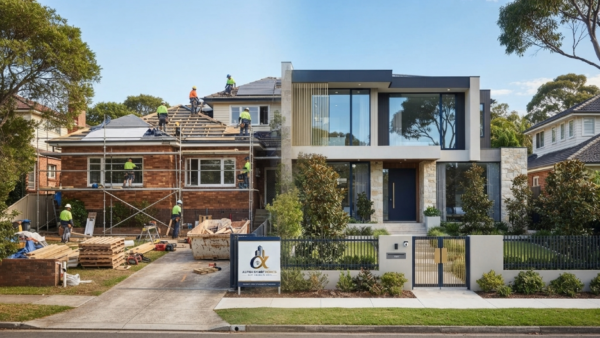
Knock Down Rebuild vs Renovation: Which Option Is Right for You?
When an older home no longer suits your lifestyle, you usually have two major choices: renovate the existing property or start again with a knock down rebuild. Both approaches can create a more comfortable and functional home, but they involve very different levels of planning, construction, cost, disruption, and design freedom.
A knock down rebuild removes the existing house and replaces it with a completely new home on the same block. Renovation, on the other hand, keeps at least part of the existing structure and improves, extends, or restructures it.
So, which option is right for you? The answer depends on your home’s condition, your block, your budget, your design goals, and how much you are willing to compromise. This guide compares the two options so you can make a confident decision before you commit.
Table of Contents
- What Is a Knock Down Rebuild?
- What Is a Renovation?
- Knock Down Rebuild vs Renovation: The Biggest Differences
- Compare the Condition of Your Existing Home
- Consider Your Budget
- Think About Design Freedom
- Compare Construction Time and Disruption
- Check Planning and Site Requirements
- Consider Energy Efficiency and Modern Living
- Think About Long-Term Value
- When Is a Knock Down Rebuild the Better Choice?
- When Does Renovation Make More Sense?
- Knock Down Rebuild vs Renovation: Quick Comparison
- Questions to Ask Before You Decide
- Final Verdict
What Is a Knock Down Rebuild?
A knock down rebuild is a process where the existing house is demolished and a brand-new home is constructed on the same land. Instead of trying to make an old floor plan work, you start with a clean slate and design the new property around your current lifestyle and the characteristics of the block.
This approach can be particularly attractive when you love your location but dislike the house itself. You may want better room layouts, more storage, modern bathrooms, a larger kitchen, improved indoor-outdoor living, or a more energy-efficient home.
The key advantage is design freedom. With a knock down rebuild, you are not necessarily restricted by the position of old walls, outdated plumbing, small rooms, low ceilings, or inefficient circulation.
However, starting again does not mean there are no restrictions. Your new home still needs to comply with the planning, building, site, and approval requirements that apply to your property. The block’s size, slope, access, orientation, easements, and local requirements can all influence what you can build.
What Is a Renovation?
Renovation involves improving an existing house rather than replacing it entirely. Depending on the project, this could mean updating a kitchen or bathroom, replacing flooring, repainting, changing lighting, extending the living area, adding bedrooms, or restructuring several parts of the house.
A renovation can be a smart option when the existing structure is sound and the current layout can be adapted to meet your needs. It may allow you to preserve features you love, such as established gardens, original details, or parts of the home with sentimental value.
However, renovation can become complicated when an old property requires extensive structural changes. Once walls, floors, roofing, plumbing, electrical systems, insulation, windows, and other components need major upgrades, the project can become much larger than originally expected.
That is why the decision should be based on the condition and potential of the existing home rather than simply choosing the option that appears cheaper at first.
Knock Down Rebuild vs Renovation: The Biggest Differences
The main difference is simple: renovation works with the existing structure, while a knock down rebuild starts again.
But the real decision involves several factors:
- Structural condition
- Total project cost
- Design flexibility
- Construction timeline
- Temporary accommodation
- Planning and approvals
- Energy efficiency
- Maintenance requirements
- Future lifestyle needs
- Long-term property goals
A small renovation may be less disruptive and easier to manage. A major renovation, however, can involve many of the same professionals, approvals, site issues, and construction decisions as a new home.
In contrast, a knock down rebuild can offer a more cohesive result because the entire home is designed as one project. Instead of combining old and new construction, you can coordinate the layout, structure, services, finishes, and energy-efficiency features from the beginning.
The right answer depends on which option gives you the best overall result for your property and circumstances.
1. Compare the Condition of Your Existing Home
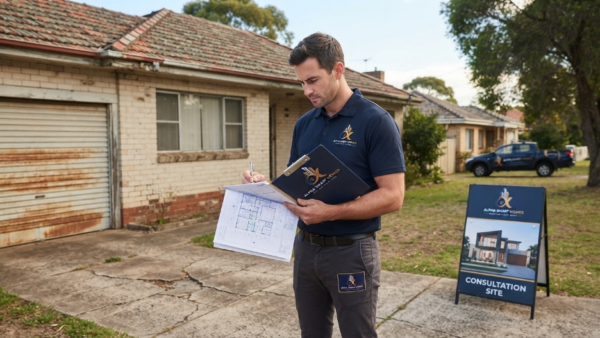
Before choosing between renovation and a knock down rebuild, honestly assess the existing house.
Look beyond the kitchen cabinets and paint. Ask whether the foundations, roof, electrical system, plumbing, windows, insulation, drainage, and overall structure are in good condition.
If the house has serious structural or functional problems, renovating may require substantial work before you can achieve the home you want. You could end up spending a large amount on an old structure while still having limitations created by the original design.
A professional inspection can help identify hidden problems. You should also consider whether the existing floor plan can realistically be changed without expensive structural work.
A knock down rebuild can become more attractive when the house is outdated, poorly configured, difficult to extend, or expensive to bring up to modern standards.
On the other hand, if the structure is solid and the layout already works reasonably well, renovation may be a more practical solution.
The important point is to evaluate the whole building, not just its appearance.
2. Consider Your Budget
Budget is one of the most important factors in the decision.
It is tempting to compare the price of a renovation quote with the advertised starting price of a new home. That comparison can be misleading because every project has different inclusions, site conditions, design requirements, finishes, and professional fees.
For renovation, you may need to budget for demolition within the existing structure, structural engineering, temporary protection, electrical and plumbing changes, new finishes, extensions, and unexpected repairs.
For a knock down rebuild, your budget may include demolition of the existing home, design and engineering, approvals, site preparation, construction, fixtures, landscaping, service connections, and other project costs.
Create a complete project budget for both options. Include a contingency for unexpected expenses.
You should also separate essential requirements from optional upgrades. If you know which features matter most, you can make sensible decisions if the project cost changes.
The cheapest initial quote is not always the cheapest overall solution. A lower upfront figure can become expensive if it excludes important work or if the existing structure creates unexpected complications.

3. Think About Design Freedom
Design flexibility is where a knock down rebuild can have a major advantage.
Renovation usually requires you to work around something that already exists. The position of structural walls, stairs, plumbing, windows, doors, roof lines, and services can influence your new layout.
Sometimes those constraints are minor. In other cases, they can prevent you from achieving the floor plan you really want.
With a knock down rebuild, the design can be developed from the ground up. You can plan the kitchen, bedrooms, bathrooms, living areas, storage, outdoor spaces, windows, and circulation as one integrated home.
You can also consider your future needs. Perhaps you need a home office now, a larger family room later, or a more accessible layout as your needs change.
The goal should not simply be to create a larger house. It should be to create a home that uses the block intelligently and supports the way you live.
If your dream layout would require extensive changes to the existing structure, compare the cost and complexity of those changes with starting again.
4. Compare Construction Time and Disruption
Both options can be disruptive, but the type of disruption is different.
A renovation may allow you to remain in part of the house during some stages, depending on the scope of work. However, living through major construction can be stressful. Dust, noise, limited access, temporary kitchens or bathrooms, and changing work areas can affect your daily routine.
A knock down rebuild usually means leaving the property while the old home is demolished and the new one is constructed. That can create additional costs for temporary accommodation, storage, and moving.
However, once construction begins, the project can follow a clearer sequence because the entire house is being built as a new structure.
Do not choose an option simply because you expect it to finish faster. Ask your builder or project team for a realistic timeline based on the actual scope of work.
Consider how the construction period will affect work, school, family routines, pets, storage, and finances.
5. Check Planning and Site Requirements
Before deciding on either option, investigate the requirements that apply to your property.
A renovation may require planning or building approvals depending on the extent and location of the work. Extensions, structural changes, heritage considerations, setbacks, overlooking, and other local controls can influence what is possible.
A knock down rebuild also needs to comply with applicable planning and building requirements. The new home’s size, height, setbacks, site coverage, orientation, parking, landscaping, stormwater management, and other factors may need to be considered.
Your block itself matters too. Slope, access, soil, drainage, easements, vegetation, and neighbouring properties can affect design and construction.
Do not assume that because an existing house is already on the land, you can automatically build whatever you want after demolition.
Early site assessment and professional advice can help you understand the opportunities and limitations before you finalise your design.

6. Consider Energy Efficiency and Modern Living
Older homes can sometimes be difficult to upgrade to the level of comfort and efficiency homeowners want today.
You may be able to improve insulation, glazing, heating, cooling, lighting, ventilation, and appliances through renovation. But the extent of the upgrade depends on the existing structure and the budget.
A knock down rebuild gives you the opportunity to consider energy performance from the earliest design stage. Orientation, window placement, insulation, glazing, shading, ventilation, efficient systems, and smart-home technology can be coordinated as part of the overall design.
This does not automatically make every new home more efficient than every renovated home. Good design and product selection still matter.
The advantage is that you are not necessarily trying to retrofit modern performance into an old building.
If comfort and long-term efficiency are major priorities, compare what can realistically be achieved through renovation with what could be incorporated into a new home.
7. Think About Long-Term Value
Your decision should also reflect what you want from the property in the future.
If you plan to stay for many years, focus on how well the home will support your lifestyle. A renovation can be ideal if it preserves a structure you love while improving the areas that cause everyday problems.
A knock down rebuild may be attractive when you want a completely modern home designed for long-term use. You can plan storage, bedrooms, bathrooms, entertaining areas, outdoor connections, technology, and maintenance requirements from the beginning.
Think about resale appeal too, but do not design solely for future buyers. A home should first work for the people who live in it.
Long-term value can include more than market price. It can also mean comfort, functionality, energy performance, lower maintenance, and the ability to adapt to changing needs.
A well-planned project can deliver value by solving multiple problems at once.
When Is a Knock Down Rebuild the Better Choice?
A knock down rebuild may be worth considering when several of the following situations apply:
- You love your location but not your existing house.
- The current floor plan is fundamentally unsuitable.
- The building has significant structural or maintenance issues.
- You want a completely new layout.
- You need several rooms or spaces that the existing home cannot accommodate easily.
- You want to coordinate modern energy-efficiency features from the beginning.
- A major renovation would require extensive structural changes.
- You want a consistent design throughout the entire home.
- You are planning to stay in the property for many years.
One of the strongest reasons to choose a knock down rebuild is when renovation would force you to compromise repeatedly. If the walls, roof, services, room positions, and structure all limit the design, starting again may provide a cleaner path to the result you want.
However, this decision should be based on professional assessment rather than assumptions.
When Does Renovation Make More Sense?
Renovation can be the better choice when the existing property has a strong foundation and structure and only certain areas need improvement.
For example, renovation may suit you if:
- You love the existing character of the house.
- The current layout is mostly functional.
- You only need a kitchen, bathroom, or living-area update.
- You want to preserve specific architectural features.
- The changes required are relatively contained.
- You want to minimise the amount of demolition.
- Your budget is better suited to a staged project.
Renovation can also make sense when the existing building has qualities that would be difficult or expensive to reproduce in a new home.
The key is understanding the difference between a focused renovation and a renovation that has gradually become a complete transformation.
If you are changing almost everything, ask whether retaining the old structure still provides enough benefit to justify the limitations.
Knock Down Rebuild vs Renovation: Quick Comparison
| Factor | Knock Down Rebuild | Renovation |
|---|---|---|
| Existing structure | Removed | Retained partly or largely |
| Design freedom | Very high | Depends on existing structure |
| Layout changes | Complete redesign possible | Limited by existing building |
| Character features | Usually removed | Can often be preserved |
| Construction disruption | Requires moving out | May be possible to stage |
| Hidden existing defects | Reduced because you start new | Can be significant |
| Energy-efficiency planning | Integrated from the start | Often involves retrofitting |
| Project scope | New home from the ground up | Varies from small to extensive |
| Best for | Complete transformation | Targeted improvements |
This comparison shows why there is no universal winner. The best option is the one that provides the right balance between your goals, budget, property, and tolerance for disruption.
Questions to Ask Before You Decide
Before committing to either option, ask yourself and your building professionals a few important questions.
Can the Existing House Actually Become the Home I Want?
If the answer is yes without major compromises, renovation may be attractive. If achieving your desired layout requires extensive structural changes, compare the alternatives carefully.
What Will the Complete Project Cost?
Ask for a realistic estimate that considers design, approvals, site work, construction, finishes, temporary accommodation, and contingency. Avoid making your decision from a headline price alone.
What Problems Might Be Hidden?
An inspection can help identify issues that are not visible during a normal walkthrough. Ask about structural condition, moisture, roofing, plumbing, electrical systems, insulation, drainage, and other major components.
How Much Disruption Can My Family Handle?
Think about where you will live, how long you may need to relocate, and how construction will affect work and family routines.
How Much Design Freedom Do I Need?
If your priority is a completely different floor plan and a new home experience, a knock down rebuild may be worth serious consideration.
What Do I Love About the Existing Property?
If the answer includes heritage character, mature landscaping, architectural details, or sentimental features, renovation may allow you to preserve those qualities.
What Will the Property Need in Ten or Twenty Years?
Try to think beyond today’s needs. A home that works beautifully now may become difficult if your family, work arrangements, mobility, or storage needs change.
Have I Compared Like-for-Like Quotes?
When comparing builders and contractors, check the inclusions carefully. Different quotes may cover different levels of work, materials, finishes, approvals, and site costs.
How to Make the Final Decision
The best way to choose between renovation and a knock down rebuild is to compare the finished outcome rather than the starting price.
Imagine both projects completed. Which one gives you the layout, comfort, appearance, efficiency, functionality, and long-term usability you want?
Then compare what it takes to get there.
If renovation requires many structural changes, multiple compromises, extensive upgrades, and ongoing maintenance, the case for starting again becomes stronger.
If the existing house is structurally sound and only needs targeted improvements, renovation may deliver an excellent result without the cost and disruption of a complete rebuild.
It is also worth considering the emotional side of the decision. Some homeowners feel attached to their existing house, while others are excited by the opportunity to create something completely new.
There is no wrong answer. The important thing is to choose based on evidence, realistic costs, professional advice, and your long-term goals.
Final Verdict
Choosing between renovation and a knock down rebuild is a major property decision, but it becomes easier when you break it into practical questions.
Start with the existing home’s condition. Then compare the complete costs, design possibilities, construction disruption, approval requirements, energy-efficiency opportunities, and long-term value of both options.
Renovation can be an excellent choice when the existing structure is strong and your needs can be achieved without excessive structural changes. It can preserve character and allow you to improve specific areas of the home.
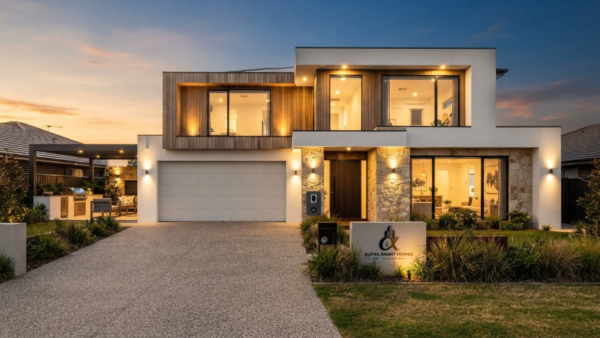
A knock down rebuild can be the stronger choice when you love the location but need a fundamentally different home. Starting from a clean slate can provide greater design freedom, modern functionality, coordinated energy-efficiency features, and a home tailored to your lifestyle.
If you are considering a new home on your existing block, explore Alpha Smart Homes for more information about building and smart-home solutions. You can also follow Alpha Smart Homes on Facebook for project updates and inspiration.
Ultimately, the right decision is not simply about whether renovation or a knock down rebuild sounds better. It is about which option delivers the best complete result for your property, your budget, and the way you want to live.
Take the time to assess the existing home, understand your block, define your priorities, and obtain detailed professional advice before making the final commitment. A careful decision today can help you avoid unnecessary costs and create a home you will be happy with for years to come.


Leave A Comment