
Smart homes are no longer a futuristic concept reserved for luxury properties. In 2026, smart technology is becoming an increasingly important part of how new homes are designed, built and experienced across Sydney.
Today’s homeowners expect more from their homes than attractive finishes and spacious floor plans. They want homes that can improve comfort, security, energy management, entertainment and everyday convenience. As a result, smart-home technology is increasingly being considered during the design and construction stage rather than being added as an afterthought.
For new-home to smart homes, builders and homeowners in Sydney, this shift represents a major opportunity. By integrating technology into the home’s infrastructure from the beginning, it is possible to create a property that is more connected, efficient, comfortable and prepared for future upgrades.
At Alpha Smart Homes, we believe the best smart home is not simply a house filled with smart devices. It is a carefully designed environment where technology works quietly in the background to support the people living there.
This guide explores how Sydney’s leading new home builders are designing smart homes in 2026, the technologies influencing modern residential construction, and what homeowners should consider when planning a future-ready home. click here.
What Is a Smart Home in 2026?

A smart home is a property where connected devices and systems can communicate, be automated and, depending on the system, be controlled remotely through apps, voice commands, schedules or centralized interfaces.
However, smart homes in 2026 are becoming more sophisticated than simply controlling lights from a smartphone.
Modern systems can connect areas such as:
- Lighting
- Heating and cooling
- Security
- Door access
- Blinds and curtains
- Home entertainment
- Networking
- Energy management
- Solar and battery systems
- Appliances
- Garden irrigation
- EV charging
- Sensors
- Voice assistants
The Australian Government’s energy guidance describes smart homes as homes where equipment and appliances can be controlled automatically or remotely. It also highlights the potential for smart-home automation to optimize energy use, improve comfort and support home safety and security.
The biggest change in 2026 is therefore not simply the number of connected products available. It is the move towards integrated home systems.
1. Smart Homes Technology Is Becoming Part of the Home’s Original Design.
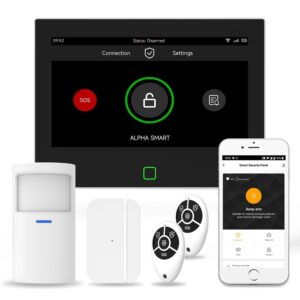
alarm-system
Smart Homes is one of the biggest changes in new-home construction is that technology is increasingly being considered alongside architecture, electrical planning and interior design.
In the past, a homeowner might finish building a house and then purchase smart lights, cameras, speakers and security equipment.
Today, forward-thinking homeowners can plan technology before construction begins.
This allows smart-home requirements to influence:
- Electrical plans
- Data cabling
- Ceiling layouts
- Lighting design
- Security positioning
- Network infrastructure
- Equipment locations
- Switch locations
- Window treatments
- Garage design
- Energy systems
This approach is particularly valuable because many smart-home components are easier to install when the walls and ceilings are still accessible.
For example, security cameras can be pre-wired, Ethernet cabling can be installed behind walls, ceiling speakers can be positioned during construction and automated blinds can be planned around window design.
The result is a cleaner and more integrated finished home.
2. Smart Lighting Is Becoming a Core Feature

Lighting is one of the most visible areas of smart-home automation.
But smart lighting isn’t simply about turning a light on and off with a phone.
In a well-designed system, lighting can become part of the home’s daily routines.
Imagine arriving home in the evening and having selected outdoor and hallway lights automatically turn on.
Imagine waking up and having bedroom lighting gradually increase while selected areas of the house remain dim.
Or imagine selecting a Movie Mode that automatically dims the main lights while turning on subtle accent lighting.
These are examples of how smart lighting can be integrated into everyday life.
Common smart lighting features include:
- App control
- Voice control
- Scheduled lighting
- Motion-based activation
- Dimming
- Lighting scenes
- Automated outdoor lighting
- Presence-based automation
- Integration with security systems
Sydney homeowners should also consider the design and quality of the lighting itself. Automation should complement good architectural lighting rather than replace it.
The goal should be to create lighting that is functional, comfortable and attractive.
3. Energy Management Is Becoming a Major Smart-Home Priority
Energy efficiency is no longer just about selecting efficient appliances.
Smart homes can also manage when and how equipment operates.
This is becoming increasingly relevant as Australian households adopt:
- Solar panels
- Home batteries
- Electric vehicles
- Heat-pump hot water systems
- Smart appliances
- Energy monitoring
- Time-of-use electricity plans
The Australian Government notes that smart-home automation can help households manage energy consumption, including shifting appliance use to different times where appropriate.
For a new Sydney home, this means smart technology can potentially connect energy generation, consumption and storage into a more coordinated system.
For example, a future-ready home could be designed to monitor energy production from solar panels and coordinate selected loads with household energy needs.
Instead of thinking about individual devices, homeowners can think about the home as an energy ecosystem.
4. Solar and Battery Integration
Solar energy has become an important consideration for many Australian homeowners.
When designing a new smart home, builders and homeowners can consider how solar generation might interact with other household systems.
A smart energy strategy can potentially coordinate:
- Solar generation
- Battery storage
- Household consumption
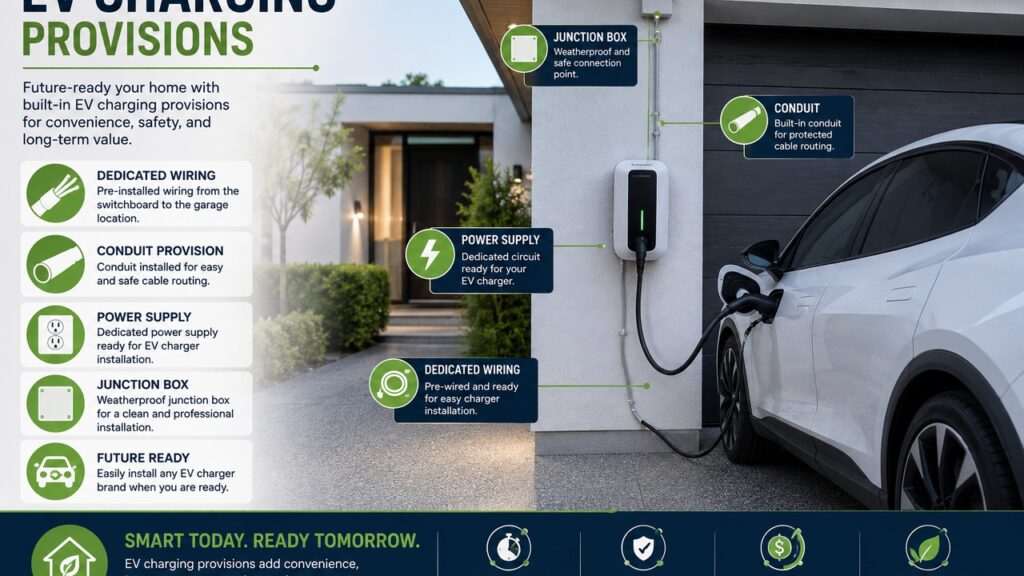
- EV charging
- Hot-water systems
- Heating and cooling
- Selected appliances
NSW’s BASIX framework also places significant emphasis on energy, water and thermal performance for new residential developments. BASIX applies to new residential dwellings across NSW and forms part of the development approval process.
BASIX tools and functionality were updated in May 2026, including changes to how certain new-home information is represented in reports and certificates.
This demonstrates why smart-home planning should be considered alongside the broader sustainability strategy of a new home.
5. EV Charging Is Being Considered Earlier
Electric vehicles are changing the way homeowners think about their garages.
A garage is no longer simply a place to park a vehicle.
It may also become an energy-management area containing:
- EV charger
- Solar equipment
- Battery storage
- Smart meter equipment
- Network equipment
- Garage-door automation
Homeowners who do not currently own an electric vehicle may still want to consider future charging requirements.
Installing suitable infrastructure during construction can provide more flexibility than trying to upgrade the electrical system later.
Your licensed electrical professional should assess the property’s electrical capacity and design any EV charging installation according to the applicable requirements.
6. Whole-Home Security Is Becoming Smarter
Security is another major area where smart technology is influencing new-home design.
Instead of relying on a single alarm system, modern smart-home security can potentially combine multiple technologies.
These may include:
- Security cameras
- Video doorbells
- Smart locks
- Motion sensors
- Door and window sensors
- Alarm systems
- Outdoor lighting
- Access control
- Mobile notifications
For example, a smart-home system could potentially connect an outdoor camera with lighting and notifications.
If movement is detected in a particular area, the system may activate a light and notify the homeowner, depending on the system’s configuration.
The important principle is integration.
Rather than having five separate apps for five different systems, homeowners can explore solutions that bring appropriate functions together.
7. Smart Door Locks and Access Control
Traditional keys are increasingly being complemented by digital access systems.
Depending on the chosen technology, homeowners may be able to use:
- Smartphone access
- PIN codes
- Fingerprint recognition
- Temporary access codes
- Remote locking
- Digital keys
This can be particularly useful for families, guests and service providers.
For example, homeowners may want to provide temporary access to a cleaner or tradesperson without handing over a physical key.
However, convenience should always be balanced with cybersecurity, privacy and reliable backup access methods.
8. AI Is Changing How People Interact With Their Homes
One of the most interesting developments in 2026 is the growing role of artificial intelligence in consumer technology.
Voice assistants are becoming more conversational and capable of understanding more natural instructions.
For example, instead of giving a rigid command such as:
“Turn on the living room light.”
Future systems increasingly aim to understand more natural requests and context.
This creates opportunities for smart homes to become easier to use for people who don’t want to manage complicated apps.
AI-powered assistants are already expanding in Australia. Amazon, for example, launched its AI-enhanced Alexa+ service in Australia in 2026, adding more conversational interaction and smart-home control capabilities.
For builders, the implication is important:
The infrastructure installed today may support interfaces that look very different tomorrow.
That makes future-ready networking and flexible system design increasingly important.
9. Smart Homes Are Becoming More Personalized
A modern smart home shouldn’t behave identically for every household.
Different families have different routines.
A young family might priorities:
- Security
- Baby-room comfort
- Automated lighting
- Energy management
- Entertainment
A professional couple might priorities:
- Home office connectivity
- Automated blinds
- Climate control
- Security
- Audio
Retirees may value:
- Simple controls
- Security
- Lighting automation
- Accessibility
- Energy efficiency
The best smart-home design begins with the homeowner rather than a catalogue of devices.
At Alpha Smart Homes, the focus should therefore be on understanding how a family actually uses its home and designing technology around those habits.
10. Smart Climate and Comfort Control
Sydney’s climate makes heating and cooling an important consideration for homeowners.
Smart climate systems can potentially help homeowners manage temperature according to:
- Time of day
- Occupancy
- Room temperature
- Schedules
- User preferences
- Weather conditions
- Energy availability
For example, homeowners might create a routine that adjusts the home’s temperature before they arrive.
Sensors can also provide additional information about conditions within the home.
The goal isn’t necessarily to run the air conditioning constantly.
Instead, smart automation can help coordinate comfort and energy use.
11. Automated Blinds and Curtains
Large windows are a popular design feature in contemporary homes, but they can also influence heat and glare.
Automated blinds and curtains provide another opportunity for smart-home integration.
Depending on the system, blinds can potentially respond to:
- Time
- Sunlight
- Temperature
- Occupancy
- User commands
For example, blinds could automatically close during periods of intense afternoon sunlight and open later in the day.
This can contribute to comfort while complementing the home’s broader energy-management strategy.
For new builds, automated blinds are particularly worth considering early because electrical or control infrastructure may need to be coordinated with window treatments.
12. Smart Homes Are Becoming More Network-Centric
A smart home is only as reliable as the infrastructure connecting its devices.
This makes networking one of the most important—and frequently overlooked—parts of smart-home construction.
A modern home may have dozens of connected devices.
These can include:
- Smartphones
- Computers
- TVs
- Cameras
- Smart speakers
- Lighting
- Appliances
- Sensors
- Security equipment
- Smart locks
- Entertainment systems
For larger Sydney smart homes, a professionally planned network can provide a stronger foundation than relying on a single Wi-Fi router.
Builders and homeowners should consider:
- Ethernet cabling
- Network equipment location
- Wi-Fi access points
- Structured cabling
- Network switches
- Security
- Future expansion
13. Pre-Wiring Is Becoming More Important
The smart-home devices available in 2026 will not necessarily be the devices homeowners use in 2030 or 2035.
That is why future-proofing is so important.
Pre-wiring can include infrastructure for:
- Security cameras
- Wi-Fi access points
- TVs
- Home theatre
- Speakers
- Smart lighting
- Automated blinds
- Doorbells
- Network equipment
- Future technology
Strategically placed conduits can also provide pathways for future smart homes upgrades.
This doesn’t mean homeowners should install every possible technology.
Instead, it means building enough infrastructure to avoid unnecessary disruption later.
14. Smart Entertainment Is Becoming More Integrated
Home entertainment has changed dramatically.
A new home might include:
- Streaming
- Gaming
- Whole-home audio
- Home theatre
- Projectors
- Smart TVs
- Wireless speakers
- In-ceiling speakers
Instead of treating entertainment as a separate system, homeowners can integrate it with lighting and other automation with smart homes.
A Movie Scene, for example, could potentially:
- Dim the lights.
- Close selected blinds.
- Turn on the television or projector.
- Activate the audio system.
- Adjust the room environment.
This is where smart-home automation becomes more than a collection of gadgets.
15. Smart Outdoor Living
Sydney homeowners often make extensive use of outdoor areas.
Modern smart-home design can extend automation beyond internal rooms.
Outdoor technology can include:
- Garden lighting
- Security cameras
- Outdoor speakers
- Wi-Fi
- Irrigation
- Pool equipment
- Gate automation
- Outdoor entertainment
- Sensor-controlled lighting
Outdoor areas should be considered during the design stage because cabling and power infrastructure can be more difficult to retrofit later.
16. Smart Irrigation and Garden Management
Water management is another area where automation can contribute to a more efficient smart homes.
Smart irrigation systems can potentially use schedules and environmental information to control watering.
This can be useful for homeowners who want to maintain gardens without manually managing irrigation every day.
When combined with broader smart-home systems, garden management can become part of an overall property automation strategy.
17. Designing for Sustainability
Smart technology should not replace good architectural design for smart homes.
The best sustainable smart home begins with the building itself.
Important considerations can include:
- Building orientation
- Insulation
- Windows
- Glazing
- Shading
- Ventilation
- Efficient appliances
- Lighting
- Water efficiency
- Solar energy
BASIX specifically considers water use, energy use and thermal performance for residential development in NSW.
Smart technology can then complement these passive and active design strategies.
This is an important distinction.
A smart thermostat cannot fix a poorly designed home.
Technology should enhance good building design—not compensate for it.
18. Smart Homes Need Better Cybersecurity
As smart homes become more connected, cybersecurity becomes more important.
A smart home may contain cameras, door locks, microphones, personal devices and other connected equipment.
That means homeowners should consider:
- Strong passwords
- Multi-factor authentication where available
- Secure Wi-Fi
- Regular software updates
- Network segmentation where appropriate
- Trusted manufacturers
- Secure remote access
- Privacy settings
Smart-home convenience should never come at the expense of basic digital security.
A professional smart-home integrator can help homeowners understand the security features of the selected systems.
19. Simplicity Is the New Luxury
One of the most important trends in smart-home design is simplicity.
A technically advanced home shouldn’t feel complicated.
Homeowners don’t want to open six different apps just to perform basic tasks.
They want simple experiences.
For example:
Goodnight
One command could potentially:
- Turn off selected lights
- Lock appropriate doors
- Lower blinds
- Adjust climate settings
- Arm security
- Turn off selected entertainment equipment
The technology should work quietly in the background for smart homes.
That’s what separates thoughtful smart-home design from simply filling a house with gadgets.
20. Builders Are Thinking About Future-Proofing
A new smart home can last for decades.
Technology changes much faster.
Therefore, a home designed in 2026 should not be limited to the devices available in 2026.
Future-proofing can involve:
- Structured cabling
- Conduits
- Accessible equipment locations
- Spare network capacity
- Flexible electrical planning
- Expandable automation systems
- Documented cable routes
- Additional power provisions
Future-proofing doesn’t mean predicting the future perfectly.
It means making the smart homes easier to adapt.
21. Smart Home Design and Construction Challenges in Sydney
Sydney’s construction environment also makes thoughtful planning important.
The Australian residential construction sector is currently facing significant labor and cost pressures, with Reuters reporting in August 2026 that builders are dealing with workforce shortages, rising costs and construction delays.
For homeowners, this makes early coordination even more valuable.
A last-minute technology change can potentially create scheduling problems or require additional work.
Planning smart-home requirements before construction begins gives builders, electricians, network professionals and other trades an opportunity to coordinate their work.
22. How Alpha Smart Homes Can Help
At Alpha Smart Homes, our philosophy is simple:
Technology should make your home better—not make your home more complicated.
A successful smart-home project begins with understanding the property and the people living in it.
Our approach can include planning for:
Smart Lighting
Create lighting scenes, automation and convenient control throughout the home.
Home Security
Integrate cameras, alarms, smart access and other security technologies.
Home Networking
Build a reliable foundation for connected devices, entertainment and home working.
Home Automation
Smart Homes bring selected systems together so they can work as one coordinated environment.
Energy Management
Explore smart ways to monitor and manage household energy use.
Entertainment
Create integrated audio-visual experiences for living rooms, media rooms and outdoor spaces.
Future-Ready Infrastructure
Plan pre-wiring and infrastructure that can accommodate future technology.
What Should You Ask Your Sydney Home Builder About Smart Homes Technology?
If you’re building a new home in Sydney, ask your builder or smart-home professional:
- Can smart-home technology be included during the design stage?
- Where will the network equipment be located?
- Will the home have suitable data cabling?
- Where should Wi-Fi access points be installed?
- Can security cameras be pre-wired?
- Should automated blinds be included?
- What smart lighting options are available?
- Can solar and energy management be integrated?
- Should EV charging be planned now?
- Are future conduits required?
- How will smart-home systems communicate?
- What happens if the internet goes offline?
- How will the system be secured?
- Can the system be expanded later?
- Will I receive documentation for the installed infrastructure?
These questions can help you distinguish between a home that simply contains smart products and a home that has been designed as a smart home.
The Future of New Home Building in Sydney
The direction of residential technology is clear: homes are becoming more connected, automated and responsive.
But the future isn’t necessarily about putting a screen on every wall.
Instead, the most successful smart homes will make technology less visible.
Lights will respond automatically.
Security will operate quietly.
Energy systems will communicate.
Climate control will adapt.
Entertainment will become easier to use.
And homeowners will be able to control important parts of the property without thinking about the technology behind them.
This is the real opportunity for Sydney’s new-home builders.
Rather than adding technology at the end of construction, smart-home infrastructure can become part of the home’s original architecture.
Final Thoughts
In 2026, smart-home design is moving beyond individual gadgets.
Sydney homeowners are increasingly looking for homes that combine comfort, security, connectivity, energy efficiency and automation into one cohesive environment.
The best smart homes begin with good planning.
That means thinking about technology before walls are closed, considering network infrastructure before devices are purchased, planning security before cameras are installed and thinking about energy management alongside the home’s broader sustainability strategy.
It also means remembering that smart technology is only one component of a successful new smart homes.
Good architecture, insulation, ventilation, windows, shading, electrical design and building performance remain essential.
Smart technology should enhance those foundations.
For homeowners building in Sydney, the biggest advantage of planning a smart home during construction is flexibility. You can create infrastructure that supports today’s technology while leaving room for tomorrow’s innovations.
At Alpha Smart Homes, we believe your home should be designed not only for how you live today, but also for how you may live tomorrow.
Build smarter. Live better. Prepare for the future with Alpha Smart Homes.
Frequently Asked Questions
What is a smart home in 2026?
A smart home in 2026 is a connected property where devices and systems such as lighting, security, climate control, entertainment and energy equipment can communicate and be controlled or automated.
Are smart homes worth it for new builds?
Smart-home technology can be particularly valuable in a new build because infrastructure such as data cabling, electrical provisions, security wiring and automation components can be planned before construction is complete.
What smart technology should I include in a new Sydney home?
Popular options include smart lighting, security cameras, video doorbells, smart locks, home networking, automated blinds, climate control, entertainment, energy monitoring, solar integration and EV charging infrastructure.
Should I pre-wire my new home for smart technology?
Pre-wiring can be a valuable part of future-proofing a new home. It can provide infrastructure for security cameras, data networks, access points, entertainment and future automation systems.
Can smart homes save energy?
Smart-home automation can help optimize energy use by scheduling or automatically adjusting equipment. The Australian Government notes that smart homes can support energy efficiency, comfort and potentially lower energy costs.
Does a smart home need Wi-Fi?
Many smart-home devices use Wi-Fi, but a reliable smart-home design can also use Ethernet, dedicated network infrastructure and other communication technologies. A combination of wired and wireless connectivity may be appropriate depending on the property.
What is BASIX and why does it matter for a new Sydney home?
BASIX is the NSW Building Sustainability Index. It applies to new residential dwellings and assesses areas including water use, energy use and thermal performance. A BASIX certificate is part of the approval process for relevant new residential developments.
Can AI control a smart home?
AI-powered assistants are increasingly being used to provide more natural interactions with connected devices. In Australia, AI-enhanced voice-assistant technology is already expanding in 2026.
How much does a smart home cost in Sydney?
There is no single smart-home price because costs depend on the size of the property, number of rooms, selected systems, wiring requirements, security, entertainment, energy systems and level of automation. A professional assessment is the best way to develop a project-specific budget.
When should I start planning my smart home?
Ideally, smart-home planning should begin during the architectural and electrical design stage. The earlier you identify your requirements, the easier it is to coordinate wiring, networking, lighting, security and automation with the construction process.


Leave A Comment